
Balance of Saturation and Absorption in Stone Consolidation

Restoration Balance in Natural Stone Consolidation
In natural stone restoration, consolidation is one of the most effective methods for strengthening damaged structures. However, one of the most crucial and delicate steps in this process is saturating the stone and ensuring its absorbency balance. The damaged surface of the natural stone must be completely saturated to the intact surface, and its absorbency must be balanced.
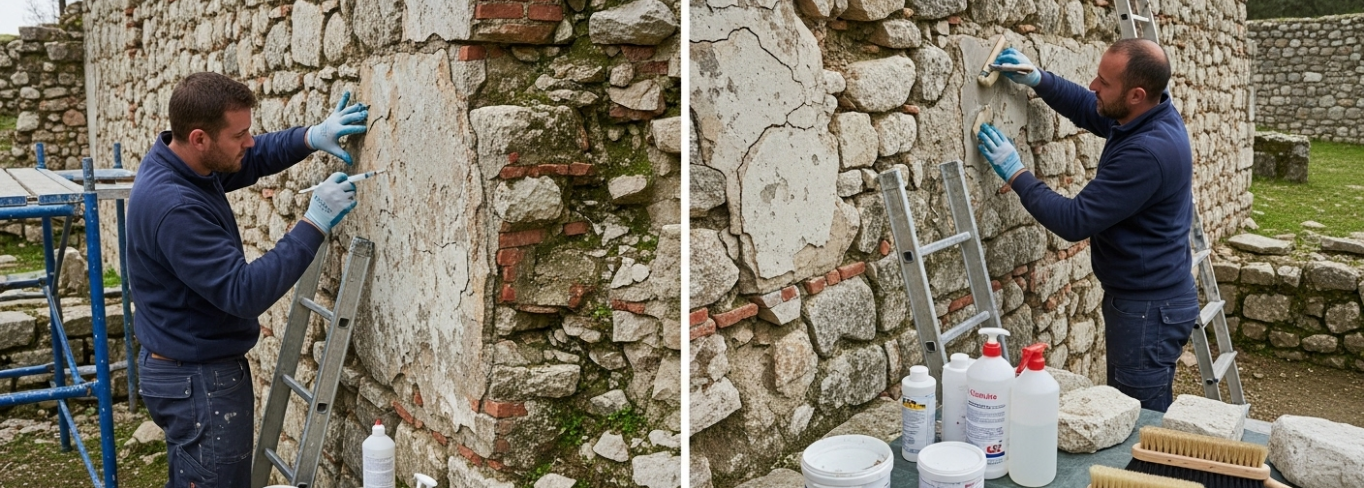
What is Feeding and Why is It Important?
Consolidating materials (silicate-based solutions) penetrate the porous structure of the stone, strengthening weakened areas. Saturation involves spreading this material evenly across all damaged areas of the stone. If the saturation process is not performed correctly:
Oversaturation can create a hard layer on the surface, severing the connection with the interior.
Inadequate saturation may lead to weak areas not being strengthened and may lead to greater damage in the future.
Therefore, the feeding process should be done in a controlled and gradual manner.
How to Achieve Absorbency Balance?
The absorbency of the stone determines how deep the consolidation material will penetrate. Different types of stone (limestone, marble, sandstone) have varying absorbency levels. Absorbency imbalances can lead to the following problems:
- The consolidant accumulated on the surface cannot reach the inner parts and provides only superficial hardening.
- In stones with low absorbency, the material does not penetrate sufficiently and the strengthening effect is limited.
To solve this problem:
- Water absorption tests and capillary water rise analyses should be performed.
- The viscosity of the consolidation material should be adjusted according to the absorbency of the stone.
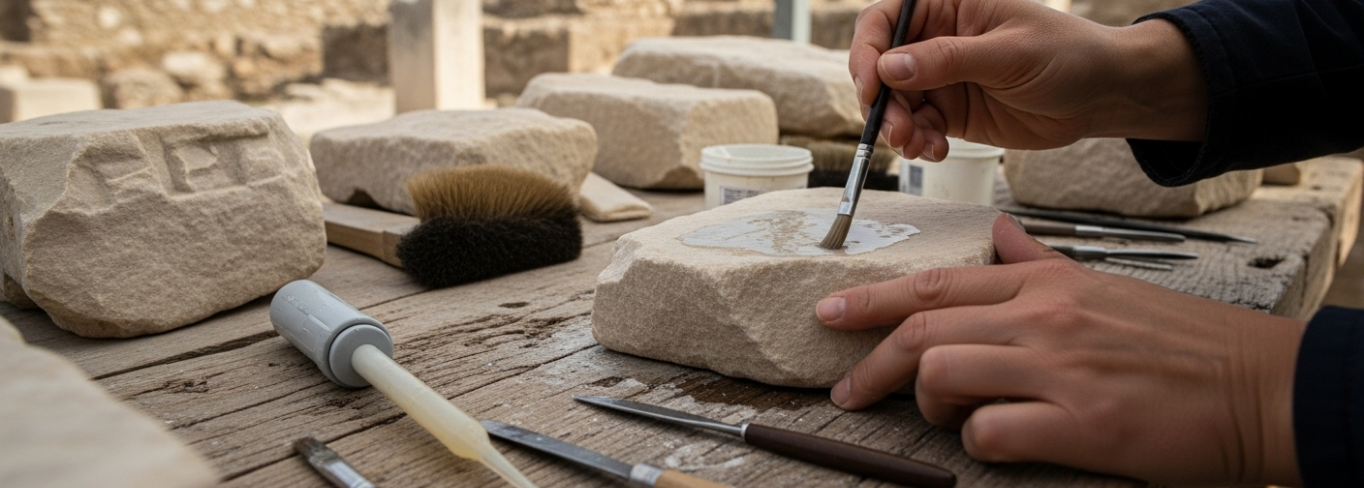
The Risks of Overfeeding: The Crusting Effect
One of the most common problems encountered during consolidation is the formation of a hard surface layer resulting from oversaturation. This situation:
- It weakens the bond between the inner part of the stone and the surface.
- Over time, it causes the shell to crack and fall out.
- It may cause moisture accumulation under the stone by preventing water vapor permeability.
Solution:
- Gradual application should be done (multiple thin layers).
- Evaporation control after surface application must be ensured.
Inadequate Saturation and Weak Points
If the consolidation material does not penetrate deeply enough:
- The inner parts of the stone remain weak, and the risk of internal collapse increases even if the surface is solid.
- The increase in mechanical strength is limited, the stone may deteriorate again over time.
How to Prevent?
- The material can be reached to deep depths by using vacuum or injection methods.
- The moisture status of the stone should be checked (dry stone absorbs the material better).
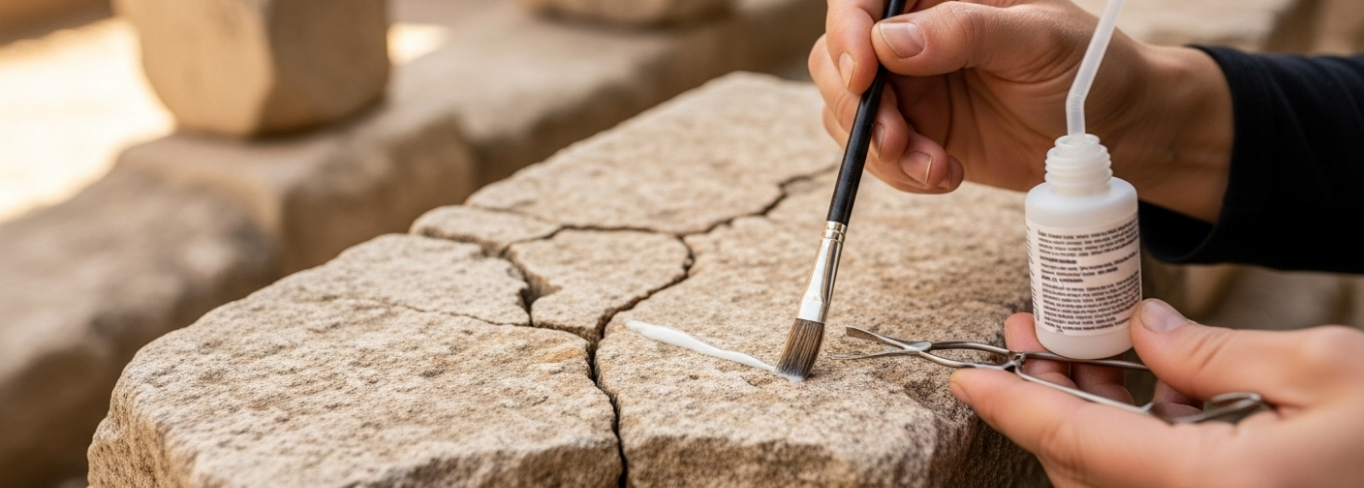
How to Establish Balance?
For a successful consolidation :
- The absorbency properties of the stone should be measured.
- Material dosage and application speed should be adjusted.
- Overfeeding or underfeeding should be avoided.
- Long-term monitoring should be done.
Consolidation is a critical process that, when implemented correctly, extends the life of historic structures and natural stone. However, if the balance between saturation and absorbency is not properly achieved, it can have the opposite effect. Therefore, process management supported by expert restorers and scientific analysis is essential.
For More Information, You Can Check Out Our Consolidation Page or Other Blog Posts...
Author: Ecotera.net
Best regards...