
Damages Caused by Improper Interventions in Restoration

Damages Caused by Improper Interventions in Restoration
Restoration processes require great care and expertise to preserve historic structures. Unfortunately, however, past misconduct can negatively impact their current state. In particular, reckless renovations and material incompatibilities create serious problems that must be addressed during the restoration process.
The Source of Faulty Interventions: Lack of Awareness and Material Incompatibility
Many past interventions were carried out without due regard for conservation principles. Modern reinforced concrete materials, cement-based plasters, or synthetic paints were applied to many historic buildings. These materials, which are chemically and physically incompatible with the original natural components of the building, such as stone, lime mortar, or wood, cause cracking, surface swelling, and salt efflorescence over time. Such faulty restoration practices can lead not only to aesthetic deterioration but also to serious weakening of the building's structural system.
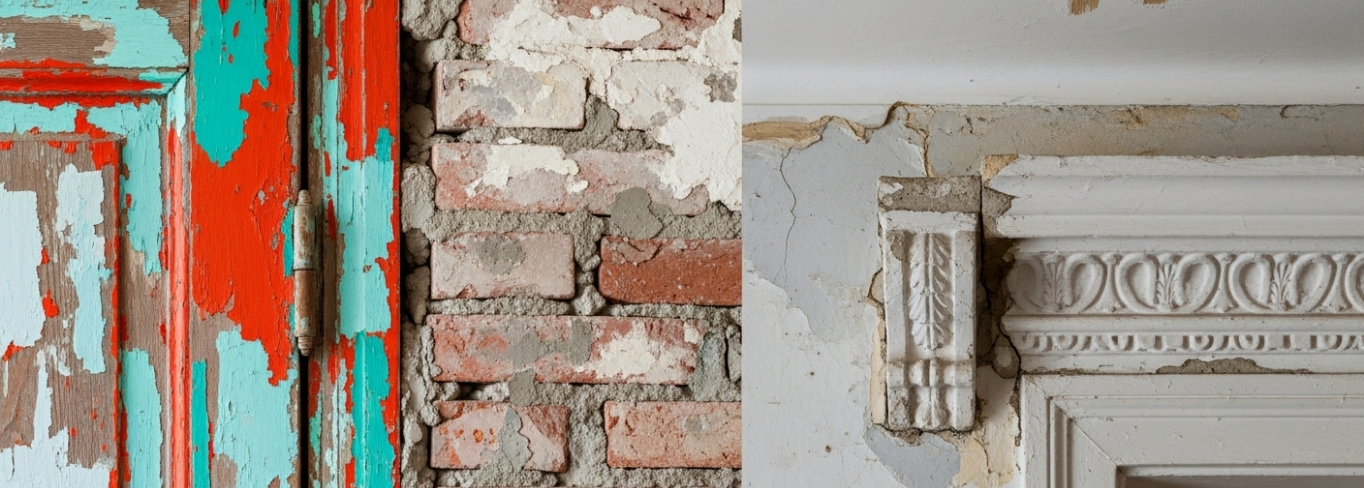
Practices That Damage the Identity of Historical Buildings
One of the most significant effects of incorrect restoration interventions is the disruption of a building's historical identity. Original façade details, ornamentation, inscriptions, or frescoes can be obliterated through careless plastering or renovation. This causes irreversible damage to cultural heritage. Improper restoration erases traces of the past and severs future generations' connection to history. 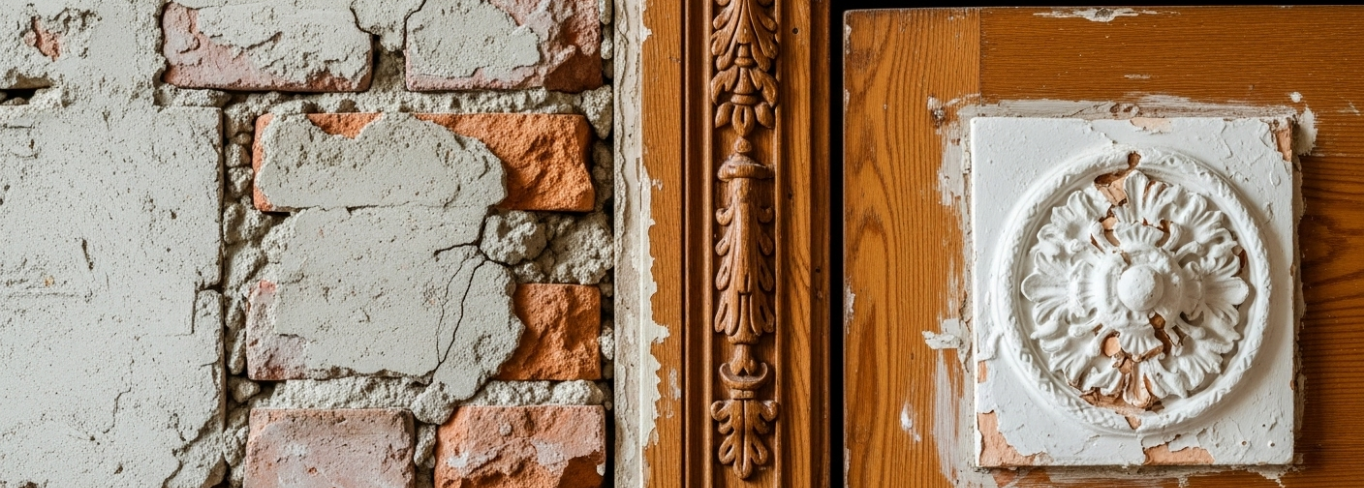
Technical Damages of Improper Repairs
Another consequence of incorrect applications is the hindrance of a building's ability to breathe. Cement-based plasters and waterproof coatings, in particular, trap moisture within the wall. This manifests itself as mold, moisture stains, and plaster swelling on interior wall surfaces. It can also lead to internal decay within the structural system, leading to a loss of material durability. Such technical problems shorten the building's lifespan and increase future repair costs. 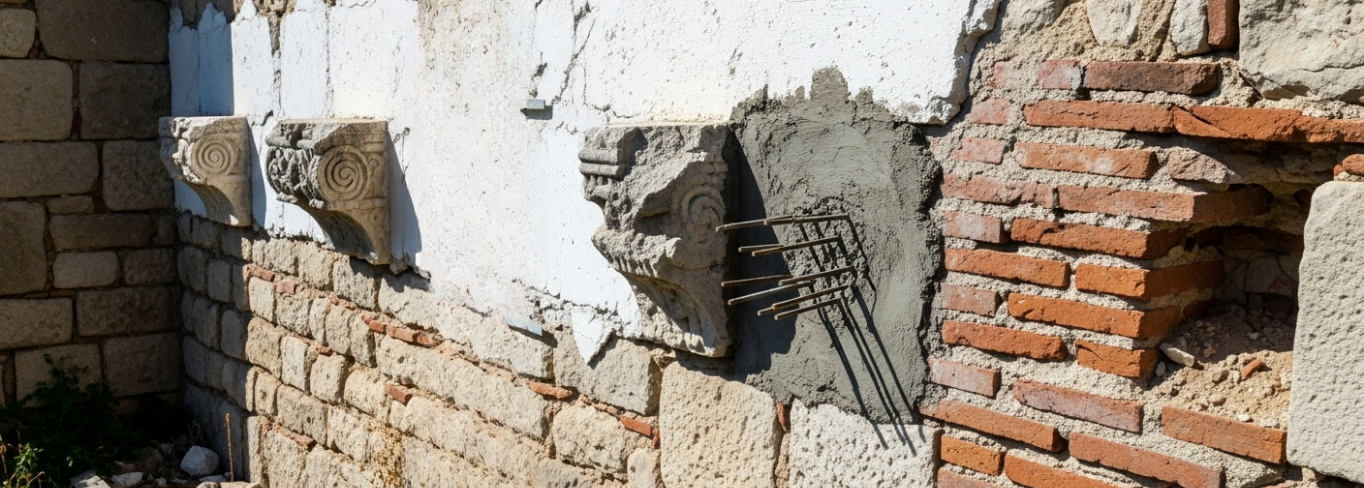
Solution: Scientific Approach and Appropriate Material Selection
To repair damage caused by inappropriate interventions, the current condition of the structure must first be determined through a detailed analysis. Surveying, material analysis, and records of past interventions form the basis of this process. Subsequently, materials that damage the structure must be carefully removed and replaced with new solutions compatible with the historical materials. For example, lime-based mortars, silicate-based paints, and breathable coatings provide long-lasting results by achieving chemical compatibility with the structure. 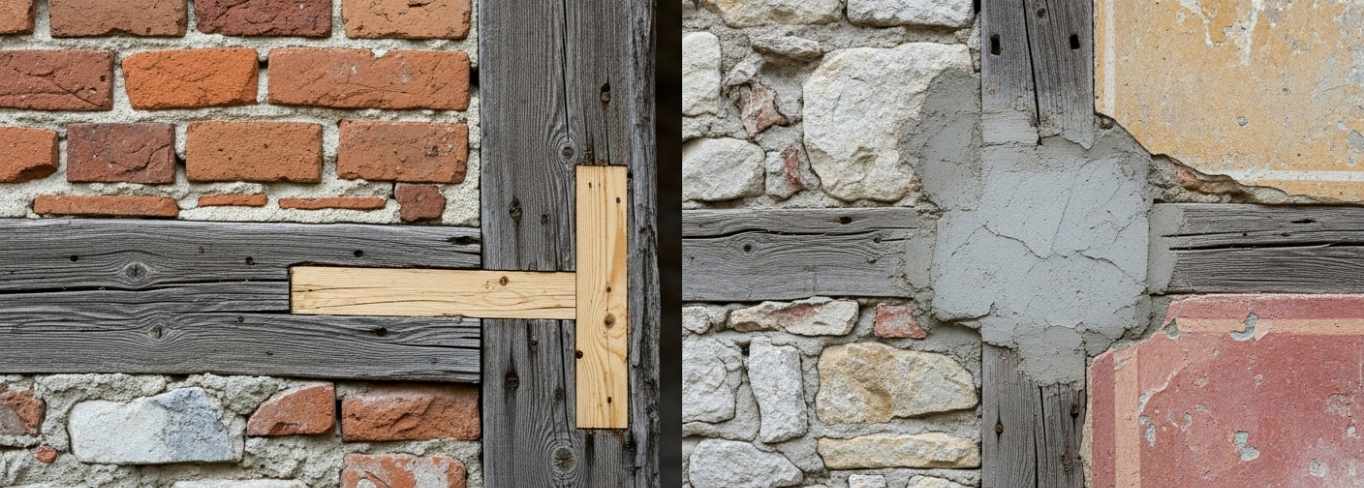
Expertise and Supervision in Application is a Must
It is crucial that every intervention in historic building restorations be carried out by experts. The restoration team must include experts such as architects, engineers, restorers, and art historians. Furthermore, it is crucial that the implementation process be carried out under the supervision of the Cultural Heritage Preservation Board to prevent potential erroneous interventions. This ensures the preservation of the building's original texture and ensures a long-term solution.
Correcting past mistakes during the restoration process is a critical step for a building's future. When damage caused by previous inappropriate interventions is repaired with the right methods and expertise, the unique values of historic buildings are revitalized. Preserving historic buildings means protecting not only the past but also the future.
For More Information, You Can Check Out Our Other Blog Posts...
Author: Ecotera.net
Best regards...