
Finishing Work in Summer Heat: Correct Repair Mortar Selection

Finishing Work in Summer Heat: Correct Repair Mortar Selection and Application Principles
Summer months are the periods of highest activity on construction sites. However, high temperatures, wind, and low humidity bring serious challenges for architects and applicators during finishing processes. Using the correct repair mortar for finishing applications due to hot weather on construction sites in the summer is of critical importance.
In particular, smoothing fair-faced concrete surfaces, plaster applications, and detailed repairs are the stages most vulnerable to the negative effects of summer heat. During these periods, preserving surface quality and structural safety requires special engineering solutions.
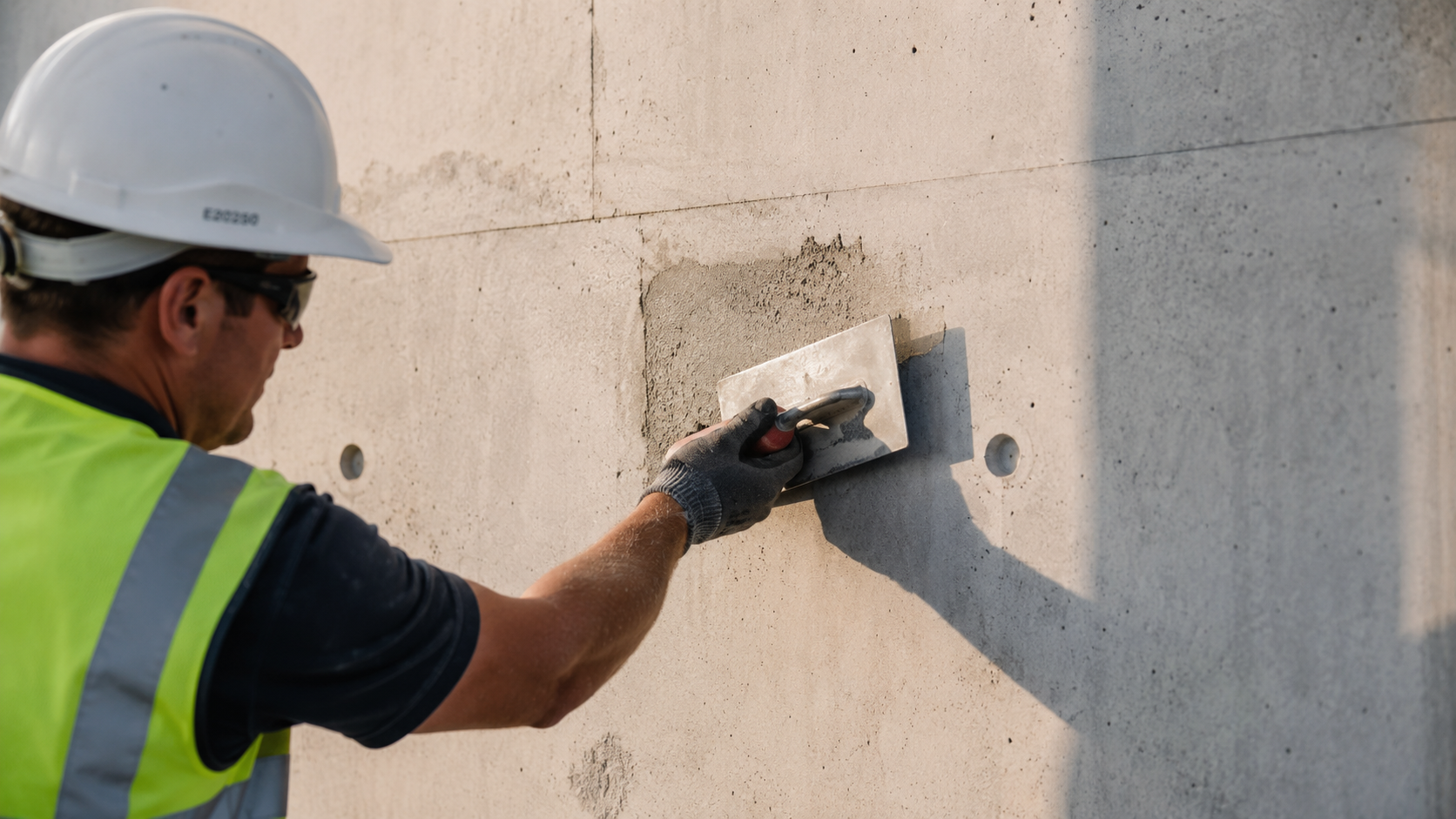
Negative Effects of Summer Heat on Finishing Work
Hot weather causes the water within fresh mortar or plaster to evaporate much faster than normal. The premature loss of water (rapid dehydration), which cement-based materials need to gain strength, leads to the formation of micro-cracks on the surface, flaking of the material, and aesthetically rough surfaces.
When a high-strength repair mortar is not preferred over conventional plaster or standard plaster mortars, these cracks create a weakness over time that shortens the lifespan of the structure. To preserve visual quality in architectural designs and extend the lifespan of the structure, construction chemicals specially formulated against these seasonal challenges must be used. In line with this, Concrete Repair Fine and Concrete Repair 800, which we have developed, embody the **repair mortar** properties needed under hot summer weather conditions.
Concrete Repair Fine: Fine and Delicate Surface Smoothing
The biggest concern when applying fine plaster or smoothing fair-faced concrete surfaces in the summer is that the material will dry quickly and flake off. Concrete Repair Fine is a specialized repair mortar product developed for repair and smoothing operations on concrete and fair-faced concrete surfaces. It offers balanced compatibility for surface smoothing operations in delicate thicknesses ranging from 0.5 mm to 4 mm.
Core technical solutions provided by Concrete Repair Fine:
- High Adhesion Strength: It bonds strongly to concrete surfaces, helping to minimize the risks of flaking and detachment.
- Easy Applicability: It is prepared quickly by mixing only with water. Thanks to its high workability, it saves time for the applicator and facilitates obtaining smooth surfaces.
- Resistance to External Conditions: Shows high resistance to water, severe frost, and abrasive external factors.
- Aesthetic Finish: It stands out as an effective repair mortar in sealing pinholes, filling micro-cracks, and creating smooth substrates prior to painting.
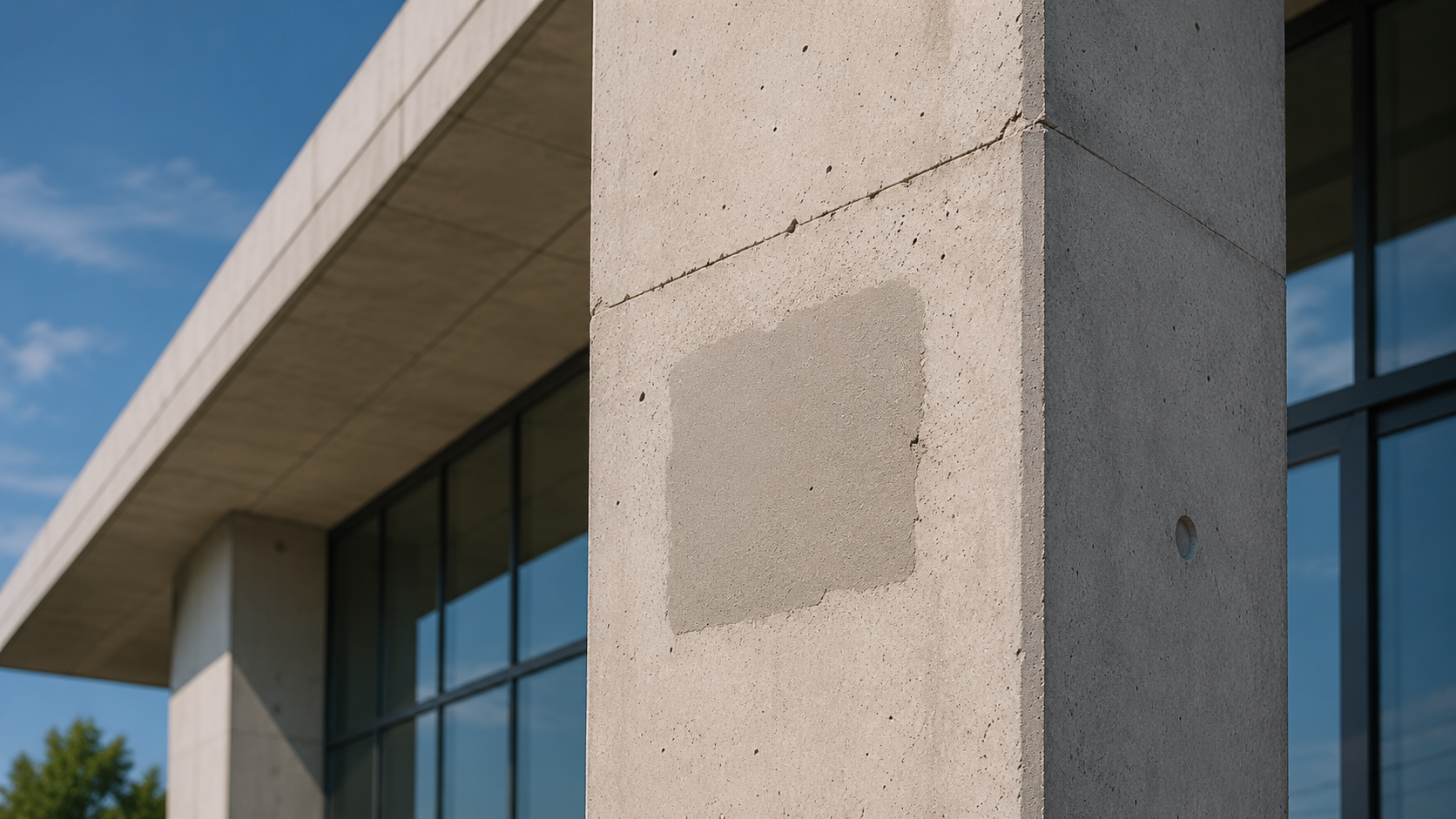
Concrete Repair 800: Deep Repairs and Structural Strength
For thicker layer levelings, segregations, or deep surface losses, a filling material capable of resisting high temperatures is required. Concrete Repair 800 is a fiber-reinforced repair mortar alternative designed for repairs and segregations requiring thick layers.
Prominent features of Concrete Repair 800:
- Flexible Application Thickness: Allows a flexible application range between 5 mm and 30 mm in repairs requiring thick layers.
- Fast Curing: Saves time to ensure projects continue rapidly in the summer months without interruption.
- Corrosion and Temperature Resistance: Resisting temperature variations, this repair mortar provides high durability in outdoor applications and helps protect steel reinforcements against corrosion.
Practical Recommendations for an Efficient Application
To achieve maximum efficiency from repair applications performed under hot weather conditions, it is recommended to pay attention to the following basic rules:
- Moistening the Substrate: Prior to application, the concrete surface must be saturated with water, taking care that no free standing water remains on the surface.
- Correct Mixing Ratio: While preparing the mortar, the water ratios specified in the technical data sheet must be adhered to; extra water should not be added to the mixture due to temperature.
- Curing and Protection: Protecting the surface from direct sunlight and rapid wind post-application, and moistening it at regular intervals if necessary, supports the proper setting of the material.
In conclusion, overcoming rapid drying and cracking problems during the summer months is only possible through the correct selection of repair mortar. Our Concrete Repair series assists you in managing seasonal challenges on your construction sites and achieving durable results in your projects, ranging from finishing work to structural repairs.