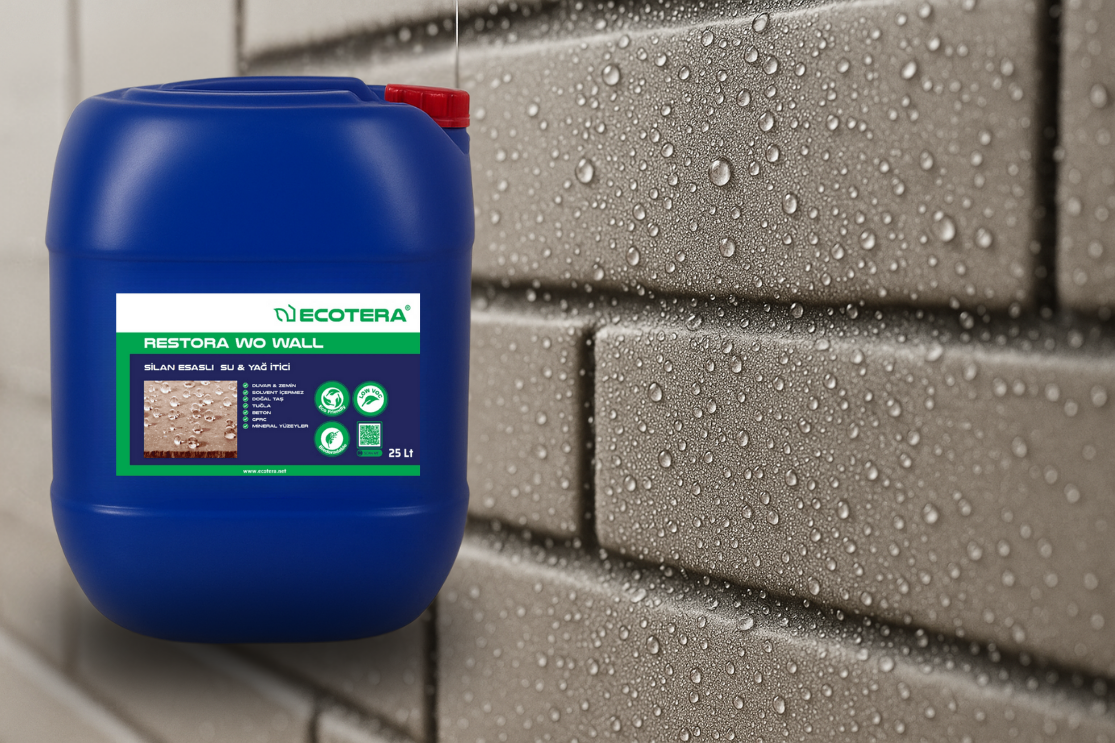
RESTORA WO WALL, WATER & OIL REPELLENT MATERIAL
Water and Oil Repellent Protective Coating
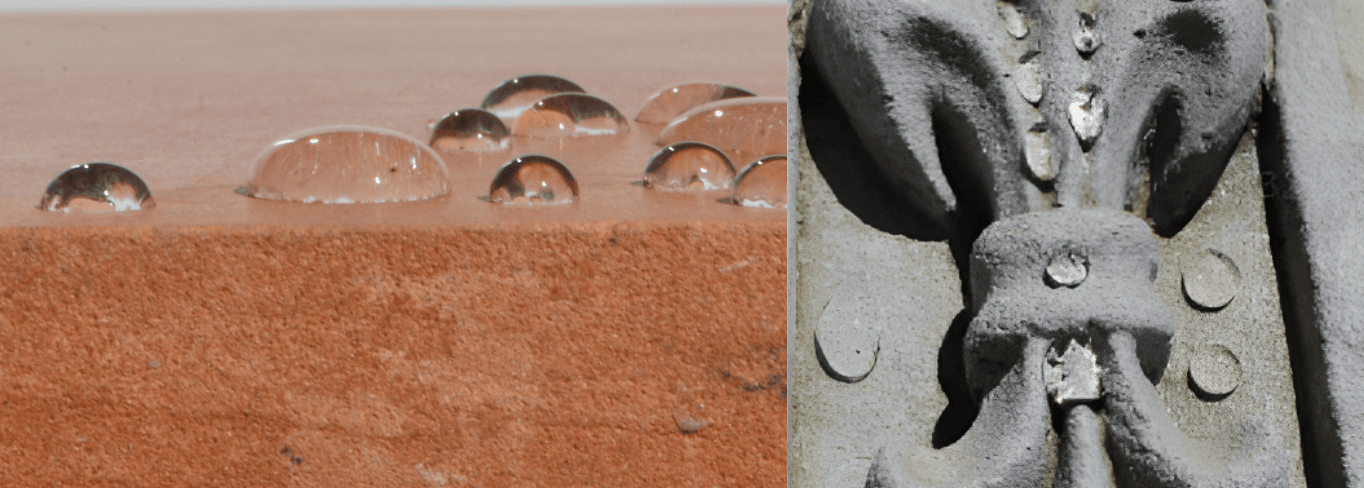
Restora WO Wall is a water-based protective coating developed to provide water and oil repellency to many mineral surfaces. It can be used on brick, tile, concrete, marble, plaster, and other natural stone surfaces, making them less prone to contamination and easier to clean. It slows the growth of algae and moss, prevents the proliferation of microorganisms, and makes the surface easier to clean.
HIGHLIGHTS OF RESTAURANT WALL
- It provides water and oil repellent properties on the applied surface.
- Stains such as coffee, cola and oil are cleaned more easily and the cleanliness of the surface is preserved.
- It slows down the growth of microorganisms such as algae and moss and prevents staining on the surface.
- Restora WO Wall is resistant to strong chemicals and alkalis.
- It allows the passage of water vapor, thus allowing the surface to breathe.
- It does not form a sticky silicone layer on the surface, thus preserving the surface's natural appearance.
- It is environmentally friendly and can be used by diluting with water.
![Full size image]()
Restora Wo Wall: Protect Your Vertical Surfaces and Keep Them Clean
Restora Wo Wall is an ideal product for making vertical mineral surfaces less prone to dirt and easier to clean. It exhibits excellent water and oil repellency, keeping surfaces clean for a long time.
Easy Cleaning, Long-Term Protection
The applied surfaces make it easier to clean common stains like coffee, cola, and oil. It also weakens the adhesion of gum and posters to exterior cladding and floors.
Effective Defense Against Microorganisms
Restora Wo Wall slows the growth of microorganisms like algae and moss. It also protects your surfaces by preventing the formation of stains left by dirty water.
Durable and Breathable Formula
Highly reactive, Restora Wo Wall is resistant to alkalis and allows water vapor permeability. The applied material doesn't form a sticky film, allowing your surfaces to breathe.
Application Amount and Test Recommendation
The amount to be applied may vary depending on the absorbency and porosity of the surface. Therefore, we recommend testing a small area of the surface to determine the most appropriate amount.


.jpeg?revision=1734588221)